Showing posts with label Valerie's Posts. Show all posts

Wednesday, October 10, 2012

Discovering the Writer Within.....

Valerie J. Steimle


Back in July of 2006, I did a writer’s workshop for the American Night Writer’s Association’s annual summer retreat based on a wonderful book I found called The Artist’s Way by Julia Cameron and Mark Bryan.

So without further ado, I am presenting to you: Discovering the Writer Within—a creative way to restore creativity for all artists searching for their best self.
                        
Whether you believe it or not, we have all been born with creativity.  Not only have we been born with creativity in writing but in other avenues as well.  Julia Cameron who wrote The Artist’s Way has had conversations that went something like this…….
            “When people ask me what I do, I usually answer, “I’m a writer-director and I teach these creativity workshops.” 
            The last one interests them…..
            “How can you teach creativity?” they want to know.
            “I can’t,” I tell them.  “I teach people to let themselves be creative.”
            “Oh. You mean we’re all creative?” They ask in disbelief.
            “Yes.”
            “You really believe that?”
            “Yes, I do.”

    Yes, she really does believe it and so do I.  We are the channel for novels, nonfiction writing, young adult stories, children’s stories, inspirational articles and the list goes on and on.  We have been chosen by our Heavenly Creator to share with others the inspirations that we receive on all subjects.

  Giacomo Puccini once said:  “The music of this opera (Madame Butterfly) was dictated to me by God; I was merely instrumental in putting it on paper and communicating it to the public life.”

I have felt that way many times over the course of the 20 years I have been writing to be published.  God dictates to me what to say and I write it down.  I think many of us do this as well. We are given our stories, our articles, and our writings from God and we dictate it on paper to communicate it to public life.

  There are some basic principles to learn in helping ourselves to become our best creative self for all areas of our lives and Julia Cameron goes through step by step to help us recover the creativity we already have within.  You do have creativity in you.  You just need to learn how to recover it.

  Although we are given certain gifts, sometimes we need a little nudge or encouragement to keep our creativity going.  There are two pivotal tools according to Julia Cameron that we can use to keep our writing going. 

Tool # 1:  Morning pages: In Julia’s words: (We are on a first name basis now) “In order to retrieve your creativity, you need to find it. I ask you to do this by an apparently pointless process I call the morning pages. Put simply, the morning pages are three pages of long, hand writing, strictly stream-of-consciousness.”

You have nothing to write, you say??? It doesn’t matter. You can start off writing, “I have nothing to say. I need to do laundry. My curtains are dirty. Blah, Blah, Blah.” This small every day task drains your brain of garbage and is not meant to be art.

Julia says: “These pages are meant to be simply, the act of moving the hand across the page and writing down whatever comes to mind.  You shouldn’t read them back and nobody else is allowed to read them either.”


Theodore Roethke says: “A mind too active is no mind at all.”  I think we can all relate to that.  Julia also says: “All that angry, whiny, petty stuff that you write down in the morning stands between you and your creativity.  Worrying about the job, the laundry, the funny knock in the car, the weird look in your spouses eyes—this stuff eddies through our subconscious and muddies our days.  Get it on the page”

And it works!!!!  I’ve been doing morning pages on and off since I read this book in 2006.  I was better at doing it every day from the start but now after 5 filled up notebooks of stream-of-conciseness writings, I try to write in my morning pages notebook at least 3 times a week.  It is amazing how it works.  The trash and worries of the day are on paper and you are ready to get some real writing work done.

Tool #2: Artist’s Date:  An Artists Date is a block of time, perhaps two hours weekly, especially set aside and committed to nurturing your creative consciousness, your inner artist.  In its most primary form the artist date is an excursion, a play date that you preplan and defend against all interlopers.
                                                                                                                               
Julia suggests you don’t take anyone with you.  But with children and husband and our busy schedules I found it was easier to take children or husband with me than to not do it at all. But there were weeks that I found myself a two hour block where I could get away to some artistic time.

“Suggested Artist’s dates: long country walks, expeditions to the mountains or beach, see a concert, opera or play. Go dancing or watch a ballet. Even spending time in solitude with your artistic child is self-nurturing. There are museums, old houses, antique stores—the sky is the limit.  You are filling your well and it should be fun. Do not do what you should do, do what intrigues you.  Explore what interests you; think mystery not mastery.”

This has helped as well.  Although with a busy schedule of children and husband, I don’t get to do this every week but, it does do wonders when you do get to indulge in an artist’s date and creativity will come bouncing out in no time at all.  Feel free to find The Artist’s Way, as there are more ideas waiting to be used to restore our creative self. I thoroughly enjoyed this book and refer to it all the time. 
Happy Writing!!!

Friday, September 28, 2012

An Interview with Joan Sowards...

Today I am interviewing Joan Sowards--one of my favorite LDS authors!  Joan has written:


My favorite was The Star Prophecy which is an historical fiction story taken from The Book of Mormon which is so cool!!! Joan is a fellow American Night Writer's Association member (ANWA) and that is how we met.


Interview: 


Valerie: Thank you for giving us your time today, Joan.  We would love to know more about you and how you feel about writing and being an author.

Why should we read The Star Prophecy?

Joan: The Star Prophecy-a Book of Mormon Adventure
is a fun twist on the “search for the Christ Child.” Enoch, a young Nephite, has a life-long dream to sail to Jerusalem, the land of his forefathers. When he hears Samuel the Lamanite preach of the birth of Christ,Enoch knows it is time for his voyage. He invites a few friends and they set sail. They witness the day the sun sets but is light all night, and see the Star and follow it to Jerusalem and Bethlehem.

Valerie: I love that story!! I'm hoping for a part 2. Now when did you first start writing and why?

Joan: After a feeble fourth grade attempt at writing a Nancy Drew wannabe, I wrote lyrics, short stories, and poetry throughout my life. When I became interested in family history, I wrote fictional account of an ancestor. From that I learned that I loved writing the longer tales.

Valerie: I think many authors discover they love to write as they grow from teen years into adults.  Okay--How do you find the determination to continue to write?

Joan: Since I love it more than chocolate (and I do love chocolate!) it isn’t hard. There is a lot of joy in crafting a story. I’d rather be writing than watching TV (which can take up a lot of creative time.)

Valerie: Most definitely.  I don't watch much TV myself because it sucks so much time out of writing. Now, how do you come up with ideas for your books?

Joan: I attended an ANWA conference class taught by Jennie Grossman. She handed out newspaper articles to prompt writing ideas. I received an article on haunted inns of southern Arizona, thus inspired Haunts Haven. My daughter brought home from Institute class the idea for The Star Prophecy, and I always wanted to write an LDS Jane Eyre—resulting in Chocolate Roses.

Valerie: Wow--I love hearing about the origins of book ideas. It's amazing where authors get their ideas.  Did you have a mentor?


Joan:  Kerry Blair. She has helped so many authors on the road to publication, but I have the claim that she mentored me before she wrote her first novel.

Valerie: Wow--that is interesting.  I didn't know that.  What do you love about writing?

Joan: Everything! I love crafting a story and seeing it blossom, working the subplots and developing the characters. Being part of the writing community (such as ANWA and LDStorymakers) is inspiring.

Valerie: Fiction is tougher for me so I can appreciate what you are saying.  What do you dislike about writing?

Joan: For sure, it’s promoting my own novels. Though I have a publisher, times have changed and authors have to do their own promoting. Tooting my own horn is a bit out of my comfort zone.

Valerie: Yes--that is very challenging especially when you are not used to marketing. What are your writing habits?

Joan: My sister and I walk early in the morning and then I write until family life takes over. I’ve found, due to health issues, writing in a recliner is best —no fancy office or desk.

Valerie: That sounds comfortable. What do you do when you don't write?

Joan: Genealogy, compose music, and joust with the grandchildren. I am also amazed at how much time social media takes out of our day. I’m also proud to be a cub scout leader. 


Valerie: Hey--I'm a den leader too. Well thank you so much, Joan  for sharing your life as a writer.  Hopefully we will see another one of your books in the works soon.

Find Joan Sowards books on Amazon:
http://www.amazon.com/s/ref=nb_sb_noss?url=search-alias%3Daps&field-keywords=Joan+Sowards 


Here is her blog: http://joansowards.blogspot.com

Tuesday, September 11, 2012

Networking For Writers

Valerie J. Steimle

I am home from my travels around the country.  I was blessed to be able to drive to Kaysville, Utah (near Salt Lake City) visit my brother, sister-in-law and father and my niece.  We went to Temple Square to see all the visitor centers and Tabernacle which was beautiful.  Then I drove to Rexburg, Idaho to drop off my daughter at BYU-Idaho and spend the day helping her get settled in and visit my Alma Marta from 1979 on my birthday.  Boy --has it changed a lot.

All that took four days. Then  I drove south to Provo, Utah to visit with my sister-in-law and then drove on to Phoenix, Arizona to spend the weekend with my oldest--Sarah and her husband and three children.  What a great trip it was.  I met a lot of people and listened to President Clark from BYU-I speak about parenting a college student.  I went horse back riding, milked a goat and then made goats milk cheese.  I even had the opportunity to catch up with some old, old friends from my youth back in New Jersey.  I drove home from Phoenix and now I am recovering from all the sleep deprivation and driving.

One thing I did realize on this marvelous trip was how much we network with each other.  Whether it's through our daily work careers or church or family--we network together and that is one area writers need to work on.

From SunOasisJobs.com
"Oh, the pains writers go through. It's not enough to write until blood spills all over the page. No, then the precious writer must write query letters, market, and, now, this humiliation of "networking."
So, what's the poor, introverted writer to do? After all, most writers are trained to spy on networks, not to participate in them. For writers, "networking" can be a tricky, peculiar problem.
A writer would network for several distinct reasons. One would be if she were shopping a manuscript around. Or if she wanted to increase exposure of a book she had just published. And, naturally, a writer wants to get known to editors and have a chance at writing assignments. It's all very difficult to do without networking.
A writer's network can be made up of editors, agents, fellow writers, experts in areas the writer writes about, people who have interesting tales to tell, people who are inside sources, and so on."


Author L. Michelle Tullier identifies six categories where networking takes place: 
1. One-to-one meetings--Other Writers, Editors, Publishers and Agents
2. Professional groups-- Other Writers, Editors, Publishers and Agents along with professional people in your topic in a group setting. Your Genre topic can also be networked among others who write in the same genre.
3. The Net- Social Networks, Newspaper and book websites, and blogs
4. Education and training- Writer Conferences, Writer's classes
5. Social/ recreational/community Settings 
6. and, lastly, what she refers to as Serendipity: Whatever blessings we receive from others in the right place at right time.

So networking is a necessary venture for all authors and can be used in small bits or very large ones. Either way it is a great way to spread your writing. You decide.


Monday, August 20, 2012

Dream the dream......

Valerie J. Steimle

The reality for many people who want to finish their first book is that many times their writings and writing time gets pushed to the way side.  Over the last several years I have been taught the value of dreaming.  Day dreaming is necessary for everyone who wants to fill a goal; an idea that has been thought about for many years.

As a young mother, I day dreamed a lot  about getting my own books published or finding myself on many by-lines for syndicated articles and here I am, 20 years later realizing I have accomplished just that. I have written and published four books and have over 300 articles published in newspapers and online websites with many syndicated all over the world and it all started with a dream.

The book, Put Your Dream to the Test: 10 Questions to help you see it and Seize It, by John C. Maxell has incredible power.  If you have ever read his writings ---they are always motivational and uplifting.

Start by answering these ten questions about your writing dream:
1. Is my Dream really my dream?
2. Do I clearly see my dream?
3. Am I depending on factors within my control to achieve my dream?
4. Does my dream compel me to follow it?
5. Do I have a strategy to reach my dream?
6. Have I included the people I need to realize my dream?
7. Am I willing to pay the price for my dream?
8. Am I moving closer to my dream?
9. Does working toward my dream bring satisfaction?
10. Does my dream benefit others?


We are writers with creative ideas and answering question four would help us realize that most of us are compelled to write.

  He discusses the fact that if we have a dream, (for example to write a novel or non-fiction book) then we should have a strategy which refers to question five.
                                                                                         
After answering the above ten questions you have a solid concept of what your dream really.  Review and answer the rest of the questions which follow:

1.      Find your present position: Ask yourself where you are now in your plans to fore fill this writing adventure.

2.      Discover your future position:  Where do you want to go?  What will my dream look like when I have achieved it?

3.      See the positions in between:  Find the pathway that lies between the first two.  What steps must I take to get from my present position to my future one?

Examine all your Actions:
            A.   Do something: start the process by doing something today, right now, immediately. Do something today that relates to your dream. Do something every day that relates to your dream

           B.  Consider all your options: Once you figure out a plan for reaching your dream there is danger that you will become inflexible and try to stick to your plan no matter what.  Sometimes it’s wiser to explore other options.

C. Utilize all your options:  This is what really caught my eye:   John Maxwell himself had written a dozen or so books and realized he wasn’t making an impact with his writing.   That is unbelievable to me.  How could someone write a dozen books and think they hadn’t made an impact on anyone?  But he did and he feels other authors or creative people do the same thing.  They write a book, they send it to a publisher and then they hope for the best.  But as Mr. Maxwell says “hope is not strategy”.  So he came up with a plan.

PLAN:
1. Come up with an idea for a really good book. Make an outline of your ideas.

2. Find a team of people who will help you (like ANWA or other writing groups)

3. Make a deadline for yourself. To do great and important tasks two things are necessary:  a plan and not quite enough time.  Meaning the plan will be set and not having quite enough time makes you work a little bit harder.
4. Creativity: brain storm with your team to come up with ideas
5. Opportunity: Thinking up ideas is great but you still have to get people interested enough in your book so they will read it.  Mr. Maxwell taught seminars from his book and sold copies. (The book he wrote after this whole experience is called Twenty-One Irrefutable Laws of Leadership which has been used for many motivational seminars and workshops.)

So dream, dream, dream all that you want to accomplish and then take note and get busy. There are many dreams to dream here on earth and not enough time. We can accomplish much with our actions and our plans.

Monday, August 6, 2012

The Remains of a Technological Day


Valerie J. Steimle

The frustration is incredible.  How can I function when my computer has blitzed out on my emails. I can’t open any hotmail from my computer!!!  Yikes. My internet server is going off every five minutes!!!  Technology problems!!!  I am going to throw this computer out the window!!!

I’m sure those statements sound familiar to everyone.  We all have to deal with modern technology, unless we are still working in the dark ages with pen and paper and an old clunker type writer.

I remember those days. I had my own portable typewriter back in my college days of 1977 to 82.  All of my papers were typed on this typewriter which I loved. I whizzed through papers like nobody’s business and was an ace at submitting all of my papers in top form just from this portable typewriter.  But now we are in the 21st Century and we are all dependent on our laptops, tablets and even desk top computers which I still use every day.  It would probably take double or even triple the time to do what I did on my old portable not to mention the inability to send off queries to agents quickly through emails.  It’s just not that world anymore.

As writers we are expected to be computer savvy enough to know our way around the programs we use to write on and store our precious finished products. It is another world for the average writer as we are more interested in grammar and storyline than the techie stuff of a computer. But it is in our best interest to keep ourselves updated in computer literacy and learn all that we can about blog designs, email attachments and other such necessities. Attending a class in computer literacy has helped me understand all of the technological insides.

Learning my way around the computer helped me tremendously to be independent on retrieving lost manuscripts, making back up copies and even converting files to other forms so I can publish my books in Kindle and Nook. It is an incredible world and writers need to be abreast of computer abilities.

In the mean time, it’s back to my email problems and trying to fix my account.

Monday, July 23, 2012

Writing Your Novel with Baby Steps

Valerie J. Steimle

Writing a novel has romantic overtones. Thoughts of sitting at a computer near a window of beautiful landscapes, typing away a story which will mesmerize the world can hold a writer at task for months at a time. The reality is we are staring at a blank screen, holed up in a room at night when everyone else is asleep. For me, writing a novel is very scary.  I started one eight years ago and finished the first 100 pages. Since my forte is nonfiction, I get shaky and weak when I think about finishing what I started.
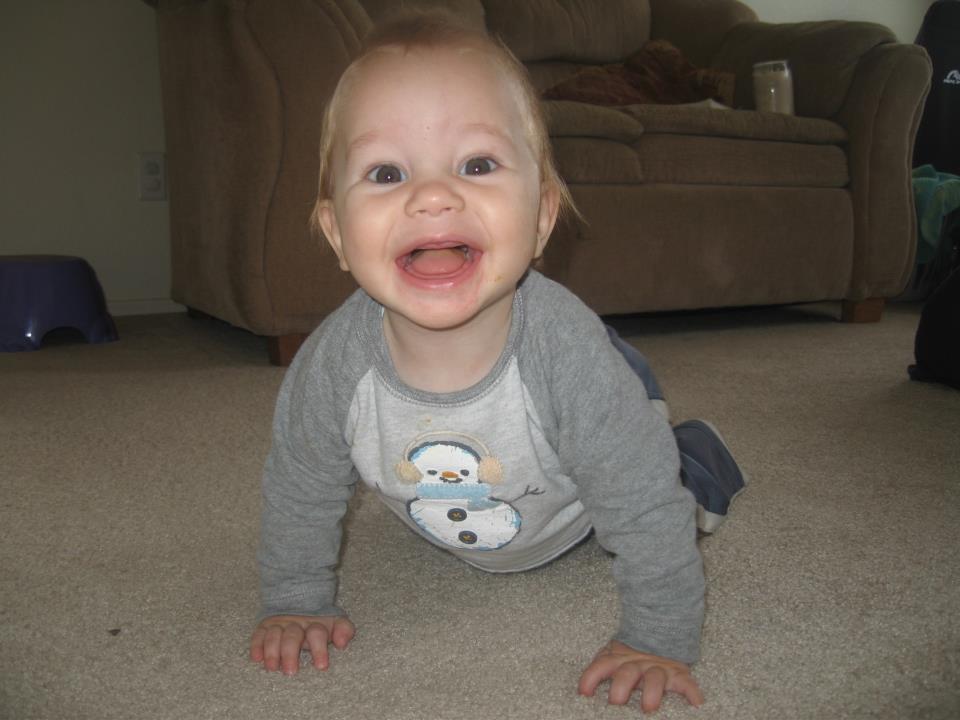
Grandson Rex....baby steps

Some time ago, I stumbled over an article in the February 2008 issue of Writer’s Digest called Baby Steps written by Bill O’Hanlon. He had authored or co-authored 28 books so I thought he would be a good source of information. As I was reading through what he had to say about writing a novel, the thought popped into my head that I needed to take notes and use them later on when I get to “that novel”. So I am passing his words of wisdom on to you.

The first thing he says is to focus on the smallest pieces of the task. Instead of thinking, I need to write this whole novel now. How am I going to do that? Think: I need to divide my project up into bite sized chunks so it is easier to work with. He illustrates this idea with a Chinese proverb: "Enough shovels of earth--a mountain. Enough pails of water--a river". I always say the best way to eat an elephant is one bite at a time but I think the Chinese have a more poignant way of communicating. Either way, Mr. O’Hanlon says you start with a simple outline. Then with that outline you write a more detailed outline which would include any anecdotes, quotations, excerpts, scenes, and plot points which characters are in the scene and where it takes place.

To start this, you should only write in small amounts of time. Choose anywhere from five to fifteen minutes a writing period. Your writing periods could be five days a week or three days a week. Whatever you can do and decide by month or week. For example, say you decide to write four days a week. Commit yourself to a two week writing period of four days a week When that time is up, recommit yourself for the next time period and you can adjust how many days if you need to. You can do it by the month or two months. Whatever you are comfortable with really helps to break down your commitment of a certain amount of time per writing period. Its “baby steps” as Mr. O’Hanlon named his article.
After your detailed outline is done then transfer each of those detailed points onto in index card that you can carry around with you everywhere you go and write on them. Keep chapters together with rubber bands and work on them as you can.

Once you have all of your cards done, you can start writing your pages using your index cards to help you. But remember: the most important thing is to write in small increments of time. If you have more time then keep going but start your allotted time each day you are to write. That will get you into the habit. There is much more to say about what I learned so in next month’s newsletter there will be another article with more great ideas. The most important thing is to stay motivated to finish your book.......one step at a time.
I need to practice what I preach so for my next month goal I am going to write my detailed outline. Not everyone can write this way but for those who are stuck somewhere between gazing at a blank computer screen and thinking, I really need to start that novel, baby steps is the way to go.

Monday, July 9, 2012

Don't Ever Quit Writing......

Valerie J. Steimle


In our normal living from day to day, life gets busy and we set aside our writing goals of the future. I'm right in the middle of organizing a manuscript that needs to be ready for publication by the end of August. With all of my summer activities, it is difficult to keep on track. Sometimes it is easy to get very distracted. Sometimes life calls us away to do other things, but the most important virtue a writer can have is DETERMINATION.  Don't Quit!!! Just be determined when you have a load of other people and activity calling you away find some time....somewhere when you can write. When life takes us on a journey in a different direction, we need a little boost to get us back on track.  Although it's beach weather for the next few months, serious writers--that is all of us--can organize our time to write, write, write!!!  
We can't do it all at once.  We have families and friends to spend our time and those are great opportunities. We just need to be determined to keep our writings going.....

 I received this poem a while ago through an email. I wish I had written it but I didn't. The author is unknown, but it is a great shot in the arm and we all need that once in a while. This poem gives it to us.

 DON'T QUIT

When things go wrong, as they sometimes will,
When the road you're trudging seems all uphill,
When funds are low and the debts are high,
And you want to smile but you have to sigh,
When care is pressing you down a bit,
Rest if you must, but don't you quit.

Life is queer with its twists and turns,
As every one of us sometimes learns,
And many a failure turns about,
When he might have won if he'd stuck it out.
Don't give up, though the pace seems slow -
You may succeed with another blow.

Often the goal is nearer than
It seems to a faint and faltering man;
Often the struggler has given up
When he might have captured the victor's cup,
And he learned too late, when the night slipped down,
How close he was to the golden crown.

Success is failure turned inside out -
The silver tint of the clouds of doubt,
And you never can tell how close you are -
It may be near when it seems afar;
So stick to the fight when you're hardest hit -
It's when things seem worst that you mustn't quit.

We all need a way to remember what is important to us as writers and authors. We all need that reminder to never give up.  So as we go through our summer months into the fall season, we should remember to fight the "fight when you’re hardest hit—when things seem worst that you mustn’t quit". 
Don’t ever quit writing.


Monday, July 2, 2012

What is an American?

  Wednesday is the Fourth of July—our Independence Day. The question I have is: What does it mean to be an American? What can we do to strengthen our land to make it better?
  In the early years of our nation, many fought for the independence from the British crown. We were such an underdog at the time; many other countries thought we would never make it. But with the prayers and courage of our colonial forefathers they made it through to independence and wrote our constitution signed by all those who wanted to band together to form an independent nation. They were all God fearing men and they had the conviction that what they were doing was the right.
  Because these brave men had foresight and inspiration, we have reaped the blessings of a free nation. But how long will we be free? How long will our nation’s government hold up to the multi-cultralism being pushed on us. Why do we have to learn Spanish? Why shouldn’t those wanting to live here in this free land doing as they please learn to speak English as my immigrant grandparents did? This is our country and if they want to live here they should incorporate our culture into theirs, not the other way around.
  When our forefathers fought to became an independent colony, they believed in God and I believe that the majority of Americans still believe in God regardless of what the media says. So why is the government trying to delete God from our society? We are still the citizens of this country and shouldn’t cow tow to what our "one-world" government elected leaders push on us. Shame on us for electing them but by the same token shame on us for keeping them in office if they prove to lead us in the wrong direction. This is still our country and our land and our lifestyle and we should be able to enjoy the freedoms our forefathers fought so hard to keep. We shouldn’t be griping about our flag, our pledge, or our Christian beliefs because if you are not happy here, you can always leave.
  So what is the answer to my question: What is an American? An American is a citizen who stands up for what they believe in regardless of what the government says. An American citizen supports it’s constitution in the fullest sense and not change it so drastically that there is nothing left but socialist propaganda. An American citizen does his/her best to vote in national and local leaders to move us forward as a stronger nation and independent of other countries, not giving our jobs and our sovereignty away in the name of "helping the world".
  Today, we need to display our flag and remember the great responsibility and blessing it is to live in this country. We need to keep the memories of our founding fathers in our hearts.  We are Americans and we should never forget it.

-Valerie J. Steimle

Monday, June 25, 2012

Ten Writing Prompts for Better Writing

Valerie Steimle

Relaxing at Barnes and Noble Bookstore on a Friday night always results in “writing” research for my brain.  Sometimes I’m like a sponge and can’t get enough information about how to be a better writer.  Then other times I just vegetate.  A couple of weeks ago, I was in sponge mode and found an issue of The Writer Magazine and started taking notes on whatever I could find.  I always need more ideas for my weekly editorial articles so I read about more prompts to help me get ideas. Accumulating writing prompts tucked away for a rainy day is very helpful and this is what I found:

Ten Prompts for More Writing Ideas:

  1. Turn on the TV or radio for a few seconds and write down the first phrase you hear. Then write for a half hour about that phrase.
  2. You discover a loose floorboard in a corner of your attic.  Write about what is underneath.
  3. Imagine the best or worst possible thing you could receive as a gift from someone and write about opening the package and how you would feel about receiving that gift.
  4. Think of a favorite accessory or piece of clothing from your past: hat, scarf, glove, belt, or buckle. Write on the images you see. Or choose a picture (like some I have posted) and write about how it makes you feel.
  5. Recall a place from your childhood that intrigued or frightened you.  Describe.
  6. Your phone rings in the middle of the night.  What happens in the next ten minutes?
  7. Pick up a minor character from a favorite movie or TV show and explore the main plot from that character’s point of view.
  8. Plan the perfect crime…..you have ten minutes.
  9. Describe the first time you drove a car.
  10. You find a bomb in an unlikely place.  Timer says 10 minutes. Now what?
Take a few minutes to write every day. This will improve your writing skills.

So there you have it.  

Ten ideas for a story or just practice. 
  
Happy writing.

Monday, June 11, 2012

 Since our blog has the theme of Mommies.....I thought this book review would fit right in.  Hot off the presses, this tribute to mothers is a great pick-me-up when you finally fall into bed and want to relax. Just a hoot and if you are having a crummy day it will be a much better one after reading a few pages. 

Musings on Motherhood is written by Susan Law Corpany who is a great writer friend and has a series of interesting novels about a widow---which I can relate to. This book has antidotes and funny stories which are very memorable and you can read this in either paper back or kindle version. 

Susan Law Corpany has been through many trials and tribulations yet sees a lot of experiences through a funny sense of humor.  A cross between Erma Bombeck and Erma Bombeck. She has a way of describing situations like no other. Whether funny or heart warming this is a great read in 216 pages.

From Amazon---
This humorous book about mothers in all their varieties is one woman's journey from devoted daughter to loving mother to non-wicked stepmother to well-intentioned mother-in-law to doting grandmother. Humorous and heartwarming, like a warm fuzzy pair of slippers with a lollipop stuck to them.
From the back cover:

"Served alongside her breakfast in bed, this "momoir" will make any mother less inclined to notice the burnt toast, runny eggs and limp bacon. Warm and fuzzy like a pair of comfy slippers, but with a lollipop stuck to them. There is something here for anyone who has ever been a mother or had a mother."

If we could all see life through Susan's eyes---we would be very blessed.

Valerie Steimle


Tuesday, May 15, 2012

A Writer's Life For Me

            I have never considered myself a very good writer.  I never liked reading as a child and slept through English classes in junior high. High school was a joke. I never paid attention. It was just not my thing.  But when I was 12 years old, I attended a church youth group workshop on journal writing. I wrote in my journal all the time.  Little did I realize it would be the beginning of my writing career.

            After college, I married my eternal companion and we started a family.  I continued to write in journals and by the time I had my fourth child, I had completed four journals.  I didn’t think much of my writing until I was pregnant with my fifth child.  The school district where we were living had decided to implement year-round school and there was a large number of parents who were opposed to it.  With pen in hand, I started to write petitions and a speech I was to present to the Board of Education.  I put a lot of emotion and passion into it and discovered that it was very therapeutic.  I knew writing in my journal would help me to feel better at times but this was different.  Other people would be reading what I wrote and my feeling for writing changed.  With the power of the pen, I had the chance to change people’s minds about what was going on in the school district.  I could rally the parents together for our cause and possibly change the school district’s mind about year-round school.  That experience gave me a sense of empowerment and I wanted to keep writing. I wrote what I knew about best which was the family.  I wrote page after page of family stories, antidotes and wisdom I had learned over the years.  Now that I had all this writing what was I to do with it? 

            After Caleb was born I felt a strong prompting to keep writing.  We moved across country from California to Alabama and I still felt the "call".  I then decided to divide up my writing by subject matter and submit the writings as articles in a column for the local paper.  The editor liked what I wrote and asked me to add more researched information and my first column Where the Heart Is was born.  I only had 10 pieces published when a new publisher bought out the local paper and my editor quit. Unfortunately, the new editor did not like what I had to say and decided against publishing my column. This was a frustrating setback and I had to start all over again.

            Did I give up?  No.  Did I keep on writing? Yes.  I continued writing my column in hopes to find a market.  By the time I wrote article number sixty, I had already submitted my articles to every market and small paper on the East coast, I decided to ditch the column idea and publish the whole sixty essays in a book myself.  If the book was as successful as the feedback from my column, I would be very happy.  I knew people liked reading about families and how important they were and I also felt strongly that I should share what I had to say. I found the best time for me was at night when every one was a sleep.  I could concentrate on what I needed to say and it was quiet.

            Then a friend of mine told me about a writer’s group she belonged to on the internet.  It was an all women’s group who were members of The Church of Jesus Christ of Latter Day Saints.  We all had the same ideals and beliefs and we all supported each other with our writings. (American Night Writers Asscociation)  I could submit something for critique and they gave honest, helpful opinions on how I could improve what I wrote.  I also did the same for them.  The culmination of belonging to this group came when I was able to attend a retreat up in the mountains of Arizona for a weekend.  Twenty-five of the one hundred members showed up with laptops and writings to share and boy did we share.  It was the best time I ever had with a group of writer women.  We listened to workshops and critiqued each other writings without hurting feelings and I left there with the motivation to finish all of my writing projects.  Belonging to a writer’s group is so helpful in keeping to your long term goal of getting published.  Being motivated by a real live person as opposed to reading about being a successful writer can give you the great motivation you really need to persistently write every day; especially when you are blocked or discouraged.

            I continue to write all the time and it has been twenty three years since I started writing that petition.  There are challenges (like raising nine children) that take up my time but I persevere.  Persistence is a great tool for writers and the payback is well worth the effort.  I have attended numerous writer's conferences improving my writing skills and listening to other successful writers. I now have 4 nonfiction books published with many articles syndicated all over the internet.  I write for two ezines regularly and up until six months ago I had my own newspaper column I had written for 4 years. I wrote 9 children’s picture book stories and I’m pursuing an agent for publication.  I love writing and I love the publishing world. I love that I can stay home with my children and do something that I feel so motivated to do and leave a legacy behind.
So to sum up:  To be a successful writer you should--
1. Start writing what you like and what you know.
2. Join a Writer's Group
3. Don't give up when discouraged
4. Attend writing seminars and workshops to learn all you can about writing.
5. Write every day
           

Tuesday, May 1, 2012

The Art of Writing in a Journal

My earliest writing memory is of keeping a journal.  My Young Women leaders encouraged us all to write and I just took to it. It has been a great stabilizer for  me over the years since then.  Many who would love to keep journals are intimidated by this idea. One day I did a class for the Young Women at Girl's Camp to pass along the same encouragement for them as was done for me. This next part is what I taught them in the class. I hope you can revitalize your writing dreams from some of these ideas.  I really like some of the prompts below as it helps me to remember things I can write about.  Happy Writing!!!

 What kinds of things might be included in your journal?
·         1. Important events, impressions, and personal feelings
·         2. Personal counsel, promises, and blessings received and the circumstances surrounding them
·         3. Deaths, births, marriages, baptisms, and endowments
·         4. Personal triumphs, failures, and struggles and how they are met
·         5. Current local, national, and world events that impress you or influence your life
·         6. Simple occurrences in daily life

     We Can Choose How to Keep Our Journals

·         1. Date each entry; the day of the week or even the time of day may be important to note.
·         2. Number the pages.
·         3. Set aside a block of time either daily or weekly to write (perhaps a Sunday afternoon).
·         4. Keep the journal nearby or take extra loose pages on trips and to special church meetings.
·         5. Use first and last names when writing about individuals.

Ideas or Prompts for writing journal entries:
1.       Write about a memory that you associate with your favorite holiday.
2.       Create a journal entry that details the one aspect of your life that you would not want to change.
3.       Write down the worst thing that can happen to you today.
4.       Create ten reasons why the worst thing may have been a blessing in disguise.
5.       Write about a difficult challenge you went through in your life.
6.       What is the funniest thing that ever happened to you?
7.       What is the most memorable moment from your childhood?
8.       What is your favorite love song and why?
9.       What is your most cherished possession?
10.  What is your favorite childhood memory?
11.  If you could have any care—what would it be?
12.   What is your dream job?
13.   What is your favorite music band?
14.   What person do you admire the most and why?
15.   What’s the most memorable historical event to you?
16.   If you had a million dollars—what would you do with it?
17.   What was the happiest day of your life so far?
18.   If you could write a book—what would be the title and what would it be about.
19.   If you could have any super power—what would it be?
20.   What was the last time you helped someone?  What happened?
21.   If you could be anyone in the world for one week who would it be?
22.   If you could have lunch with anyone –alive or not—who would it be?
23.  What’s your favorite meal and why?

Tuesday, April 17, 2012

Me??? A Grandmother???

            I was happy when my first born told me she was pregnant.  Posterity!  That was what I really wanted. But after a couple of hours of celebrating, it hit me like a ton of bricks: I was to be a “grandmother”.  A grandmother?  I’m 46 years old and I looked 35.  I am definitely too young to be called “Grandma”.  So I went about asking my friends what name for Grandma they used or what their grandchildren called them.  The results were interesting.

            "MeeMa" is the southern version and that is pretty popular where we are living in Alabama but I didn’t like it. "Oma" is the German form but that didn’t sound like a young grandma either.  "Iidee" (pronounced I-dee) is Finish for Grandma as "YaYa" is in Greek. But those didn’t seem to fit either. I kept thinking there must be some name I can be happy with.   "Nona" is the Italian version and Bunica, Romanian.  It sounded exotic but not quite right.     "Nadie" is Hungarian and "Bubby" is Yiddish.  Still not right.   There were also other suggestions: Mimi, Vivi, Gram, and Granny.  None of those seemed to work for me so I kept searching.  I asked the mail ladies at the post office.  I asked strangers in line at the grocery story.  I asked women at the auto center at Walmart and the Pharmacist down the street.  Everywhere I went I asked, but nothing struck my fancy.

            Then one of my daughters rented the movie “Rumor Has It”.  This was a real eye opener for me.  In the movie, the Grandmother (played by Shirley McClain) refused to be called Grandma.  She didn’t like it at all and told her granddaughter to stop calling her that even though she looked old enough to be a grandma.   This really frustrated her granddaughter (Jennifer Aniston) in the movie and that gave me more food for thought.

            Soon after that I took a trip to Phoenix for the annual ANWA writer’s retreat and decided to drive to Los Angeles afterward to see my daughter, her husband and the newest member of the family.  So there I was driving across the desert to LA from Phoenix.  It’s a 4 hour drive and I put a CD in the player and started driving.  I had lots of time to think.  I had to make a decision.  Was it really that important to find a name that didn’t sound too old or was that just my pride getting in the way?  The drive went really fast and before I knew it I was driving down the freeways of Los Angeles on my way to my daughter’s house.  During that time I realized something:  It doesn’t really matter what you call yourself.   You are your children’s grandparent. 

            Flying back to Alabama I made my decision.   Being called Grandma was much more important for my grandchildren than for me feeling old or young. It really doesn’t matter.  I can still feel young after spending time with them; it’s all a state of mind.  After all, they just want a grandma to be with them and that is what counts the most. 

Tuesday, March 6, 2012

The Challenges of Writing

I have been sitting here staring at a blank screen for the last two hours trying to write my blog entry.  My children are around involved with several things: playing video games, watching “The Aviator” and staring at our broom standing up on end.  That alone would probably get my brain going.  Still nothing.  So I start to research what I might talk about: Politics, religion, health issues, children.  Nothing strikes my fancy.  I read through my “morning pages” and all I have been writing about is all the woes of remodeling without enough money .  No good.  So I go to my writer’s notebook and low and behold there are some notes on writer’s block.
  From Stephen Blake Mettee article on Banishing Writer’s Block, he suggests several ideas. If you think you have nothing to write about then think about this: 
            1. you have no plan
            2. you don’t have enough information
            3. you don’t change subjects enough.
            4. you have a lack of passion
                 
            Having a plan is easily fixed with writing down your ideas in a notebook as I have done.  Gathering information about a topic is also not difficult only time consuming.  You can do it with a few hours of time. Changing the subjects in your writing isn’t that difficult either.  Reading and researching takes time but it is worth it.  And the last of them: passion.  If you have no passion about anything, I don’t know what you can do about that.  You can’t just run out and buy some.  Writer’s need to work on what gives them their opinions and ideas about certain subjects.  The passion should soon develop. I’ve done all of that and still no ideas. What else am I to do.

            Perfectionism is another idea Mr. Mettee wrote about with writer’s block.  He says to allow yourself to write a flawed and mistake ridden draft and edit it later.   Just get the ideas down on paper and never mind how they look.  You can always rewrite it.  You can’t rewrite a blank page.  So I just start typing whatever is in my head.

            Self-Doubt.  Another challenge to overcome is the negative thoughts that drain your creativity and set you up for failure.  Give yourself positive thoughts and just start writing.  A pep talk to yourself so to speak.  You can do it.  You have done it so many times before. Just start typing and before you know....voila you have something you can work with.

            So there you have it.  How to overcome writer’s block.  A challenge we all face from time to time that we must overcome.

Wednesday, February 22, 2012

Dealing with Rejection.....

Oh my goodness..... I missed my last blog post on here and I feel awful. I hadn't marked the rest of my calender to schedule in a writing session for this blog. I realized a couple of weeks ago that my schedule of blog posts ran out and and thought I was done.   But I'm not done....I have so much more to write.  So looking at the schedule of when I contribute, I realized that I missed an entry....but never fear I will pick it up again and continue on.

Part of my absence was because of  me and my husband's work schedule.  It changed drastically at the beginning of the year.  So while we are making more money doing other things---I am not getting to write as much.  On top of that I was given the ax at the newspaper I wrote for every week.  Because of budget cuts, I was informed that my last column was published last Friday-- which was three weeks ago. I couldn't even write a good-bye column, it was just "That's it---you're gone".  Terrible. I wrote that column for 3 1/2 years which gave me over 200 articles on many, many topics.  It's so sad to see it end but sometimes that's what happens. 

So what do we writers do after a difficult loss of position or rejection????  We think about it for a while, we have a good cry and then we pick ourselves up and continue writing.  I realized that I have enough material to publish another book which will be a collection of my best 100 columns and get myself out there even farther than my own county paper.  I can finish several manuscripts I had been working on for over the last year and I can rearrange my work schedule to spend more time with my family. 

So here I am and will be writing posts to this blog to keep me on my toes and writing my best.  That's all any one can ask for..... 

Happy Writing!!!